How to Toast Burger Buns: Griddle, Timings and Common Mistakes
How to toast burger buns: griddle, fat, indicative timings and common mistakes to avoid for a bun that is crisp outside and soft inside.
Toasting the bun is one of the quickest jobs on the line and one of the most underrated. It takes a few seconds, but it decides whether the burger reaches the table with a base that holds the meat juices or with a soggy bun that falls apart by the second bite. Here is how to toast burger buns in a repeatable way, with professional kitchen equipment and rhythms.
Why toast the bun
Toasting does four things, all useful in service:
- It creates a barrier. The dry, golden inner surface slows the absorption of juices, sauces and toppings.
- It adds flavour. The browning brings a toasty note that works with the crust on the patty and with the cheese.
- It builds contrast. A slightly crisp interior and a soft crumb: this is the difference between an ordinary burger and a memorable one.
- It warms the bun. A warm bun shows off a hot patty, while a cold one cools it down quickly.
Griddle, salamander or contact toaster
There is no single method: it depends on volumes and available space.
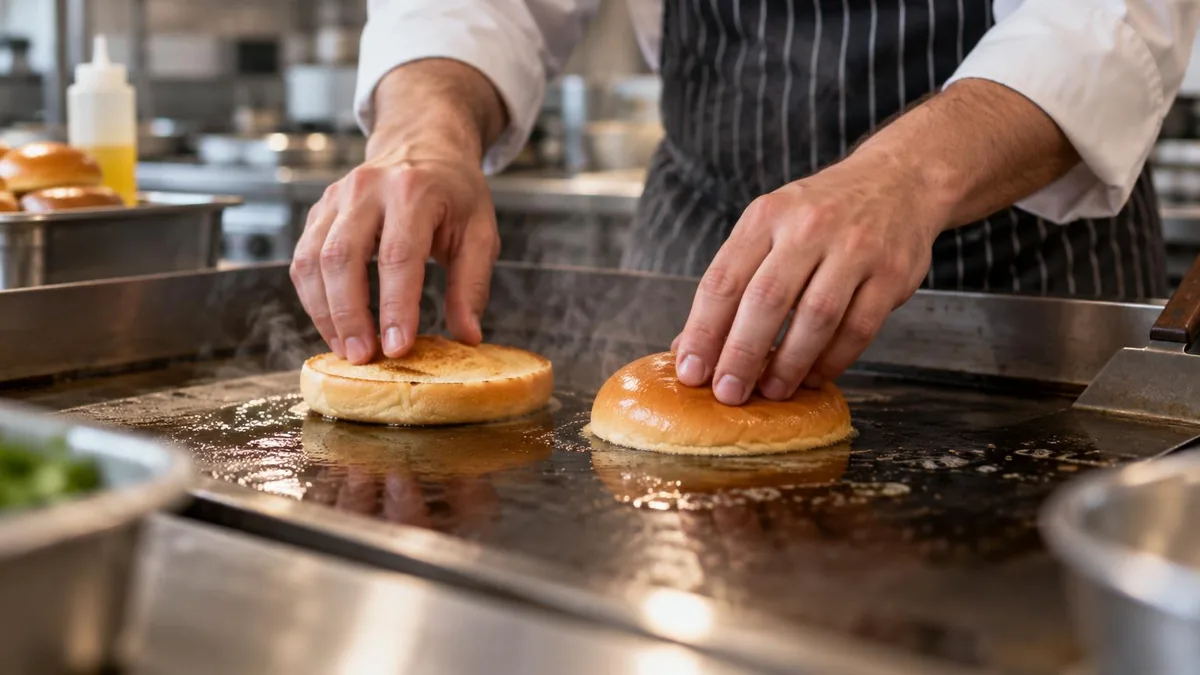
Griddle. This is the most common solution in burger bars. Contact is even and browning is regular. It is best to dedicate a separate area of the griddle to the buns, away from the meat, so that fats and residues that burn and give an off taste are not transferred.
Salamander or grill. Quick and convenient when you have many pieces at once, but harder to control: the edges darken before the centre, and one moment of distraction is enough to burn the crown.
Contact bun toaster. Designed for high volumes: it standardises timings and results and frees up the griddle. It needs an initial calibration and regular cleaning of the surfaces.
The oven makes sense as a step to warm the buns in advance, not as a real toasting method.
Timings and temperatures: indicative ranges
The values below are only starting points, to be checked with your own bun and your own equipment:
- Griddle: surface generally between approximately 160 and 190 °C.
- Time on the cut face: often between 30 seconds and a minute and a half, until an even hazelnut-coloured browning.
- Pressure: light, just enough to ensure contact; pressing the bun down compacts it.
Timings and temperatures change with the thickness of the cut, the sugar content of the dough, the moisture of the bun and the power of the equipment. The practical advice is to do a test at the start of the shift, record the right result on a spec sheet and have the whole kitchen team replicate it.
The toasting fat
Dry toasting is possible, but a thin film of fat helps browning and flavour. The most common options:
- Clarified butter: it withstands heat better than regular butter and gives a full aroma.
- Regular butter: very aromatic, but it tends to burn quickly if the griddle is very hot.
- Neutral oil or blends: more stable and neutral, suited to high-volume lines.
The rule is to use little and apply it evenly, with a brush or a spatula. Too much fat makes the bun greasy and heavy, and the crust loses definition.
How toasting changes with the bun
Classic bun. Medium toasting with even browning: this is the reference to start from.
Seeded bun. The seeds on the crown should not touch the griddle, because they burn and make a mess. Toast only the inside and, if needed, warm the crown separately.
Coloured bun. Doughs made with coloured ingredients can shift in hue or darken in an unappealing way: it is better to toast gently and keep an eye on them.
Potato bun. Soft crumb and a surface that colours quickly: shorter times and a lower temperature are usually enough. If you want to know when to choose it, you will find the details in Potato bun: what it is and when to choose it for burgers.
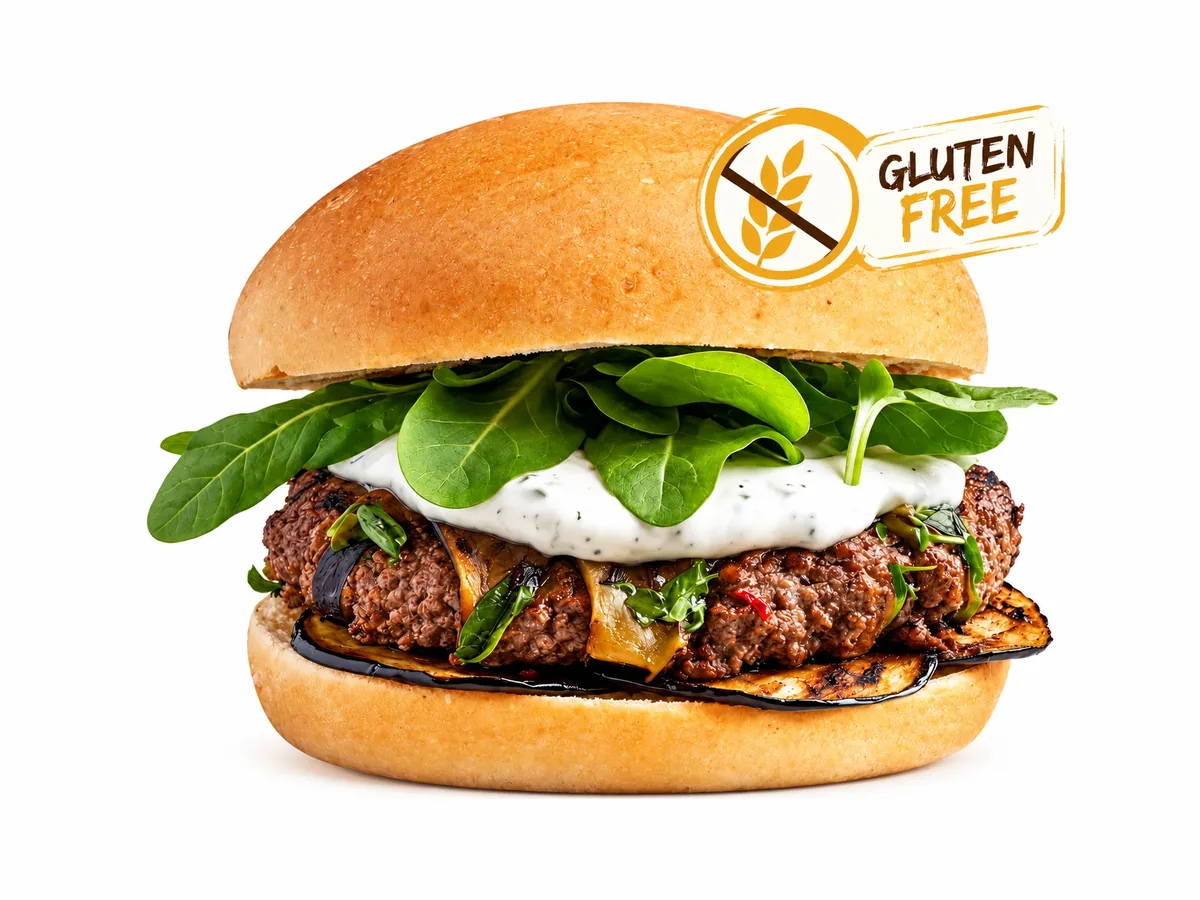
Gluten-free bun. Here the technique takes second place to handling. The wording “gluten-free” is permitted only under the terms of Reg. (EU) No 828/2014, i.e. below 20 mg/kg, and the right product is not enough: toasting requires a dedicated surface, separate utensils and trained staff, to reduce the risk of contamination. You cannot promise the absence of risk; you work with clear procedures, referring to the guidance of the Associazione Italiana Celiachia (AIC). An operational overview is in The coeliac customer in the burger restaurant: how to handle them properly in the dining room and kitchen.
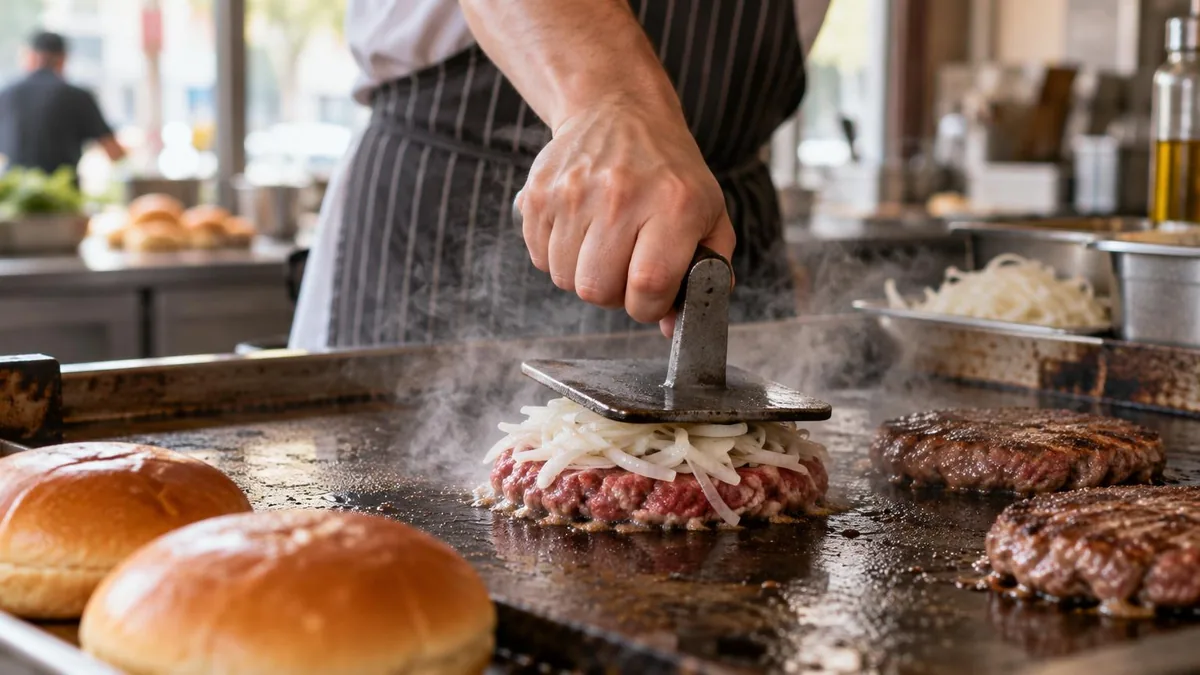
A separate word on smash burgers: the smashed, crisp patty needs a bun that does not overshadow it, so usually a light toast and a soft bun. The topic is explored in Smash burger: a trend born a hundred years ago (and what it means for the bun).
The most common mistakes
- Griddle not at temperature. Too cold: the bun dries out without browning. Too hot: it burns outside and stays white inside.
- Toasting too early. A toasted bun left waiting softens and loses its advantage. Toasting should be synchronised with the cooking of the patty.
- Too much fat. The bun becomes greasy and the base gives way sooner.
- Dirty griddle. Charred residues transfer to the bun, with odour and dark marks.
- Toasting only one half. If base and crown are treated differently, the burger ends up unbalanced.
- Pressing the bun down. You lose volume and the crumb compacts.
- No standard. Every cook toasts in their own way and the result changes from one shift to the next.
Toasting, line speed and margins
Toasting affects margins more than it seems. A burnt bun is a piece to throw away, and a remade burger costs bun, meat and time. Standardising the method reduces waste and makes service times predictable, especially at peak hours.
A few organisational tips:
- a dedicated bun station, with tools and fat within reach;
- a spec sheet with indicative timings and a picture of the expected result;
- a check of the griddle temperature at the start of the shift;
- training the whole kitchen team on the same method.
If you also sell for delivery, remember that the burger travels in a closed container, where steam softens the bun. A slightly firmer toast on the inner face helps maintain structure. For the general approach to packaging, sauces and hold, see Burger buns for delivery: how to get the burger there intact.
Frequently asked questions
Is it better to toast the bun dry or with butter?
It depends on the style of the venue. Dry, the result is more neutral and quicker; with a thin film of clarified butter or oil, the browning is richer and more aromatic. What matters is to use little fat and keep the same method in every shift.
Can you toast the bun on the same griddle as the meat?
You can, but a separate area is preferable: that way the bun does not pick up burnt residues and fats from the meat. In the case of the gluten-free bun, separating surfaces and utensils is an essential part of the handling procedures.
How long does it take to toast a bun?
Indicatively between 30 seconds and a minute and a half on the cut face, with the griddle at approximately 160 to 190 °C. These are starting values: the right time depends on the type of bun, the thickness and the equipment, and should be defined with a test in the kitchen.