Coeliac Customers in a Burger Bar: How to Handle Them Front of House and in the Kitchen
How to serve coeliac customers in a burger bar: procedures, separate preparation, staff training and certified gluten-free buns.
One More Customer to Welcome, with a Clear Method
A coeliac customer walking into a burger bar is not asking for special treatment: they are asking for clarity. They want to know whether the venue has a procedure, whether the staff know it, and whether they can trust the order they are about to place. Handling this moment well does not mean promising the impossible, but putting a series of practical steps in order, from the welcome in the dining room to the delivery of the dish.
For the regulatory side, the "gluten-free" wording and menu planning, the reference guide remains Gluten-free burger buns: rules, kitchen and menu for foodservice. Here we focus on practical service, step by step.
Taking the Order: The First Question to Ask
When a customer mentions an intolerance or coeliac disease, the first useful thing is a simple, direct question: "Would you like your dish to be prepared separately?". This opens a dialogue that avoids misunderstandings and lets front-of-house staff trigger the internal procedure straight away, without improvising at the table.
It is important that whoever takes the order can tell the difference between a customer who follows a dietary choice and one who has a coeliac diagnosis: in the second case, kitchen handling must be stricter, because even minimal traces of gluten can matter. It is not the dining room staff's job to make diagnoses, but it is their job to pass the information on to the kitchen accurately and promptly.
In the Kitchen: Separation Comes First
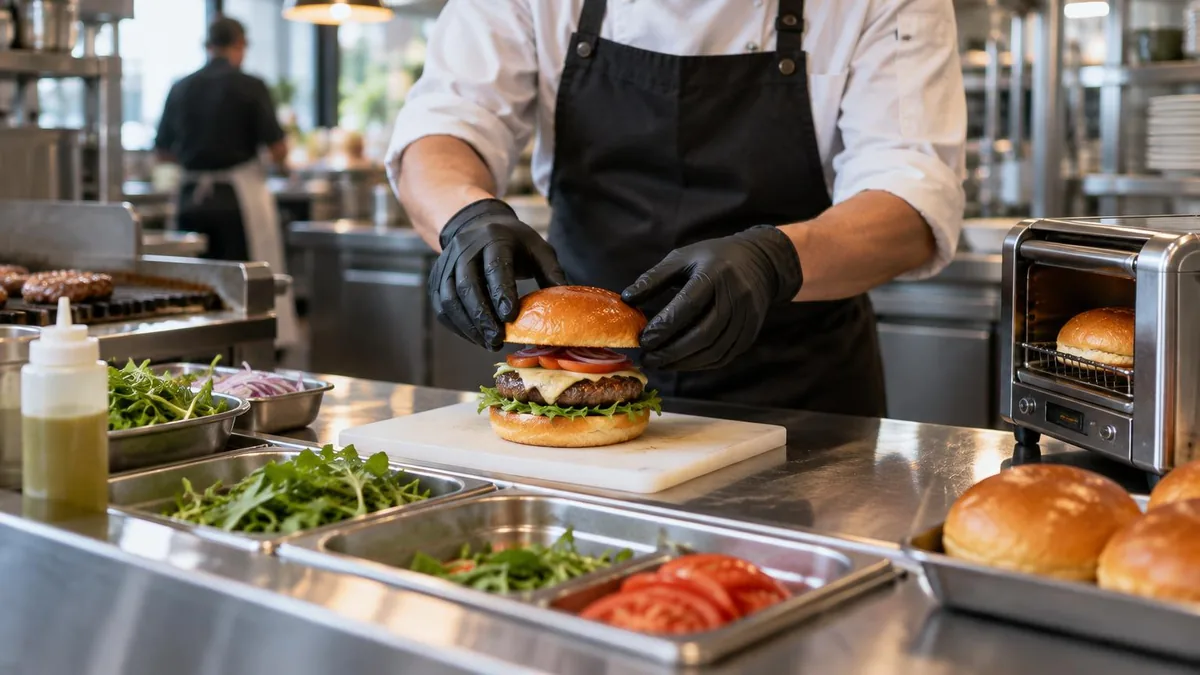
The key word is separation. A burger bar that wants to handle these orders correctly should provide:
- a dedicated worktop, cleaned before every "gluten-free" preparation;
- its own utensils (tongs, spatulas, chopping boards) not shared with standard preparations;
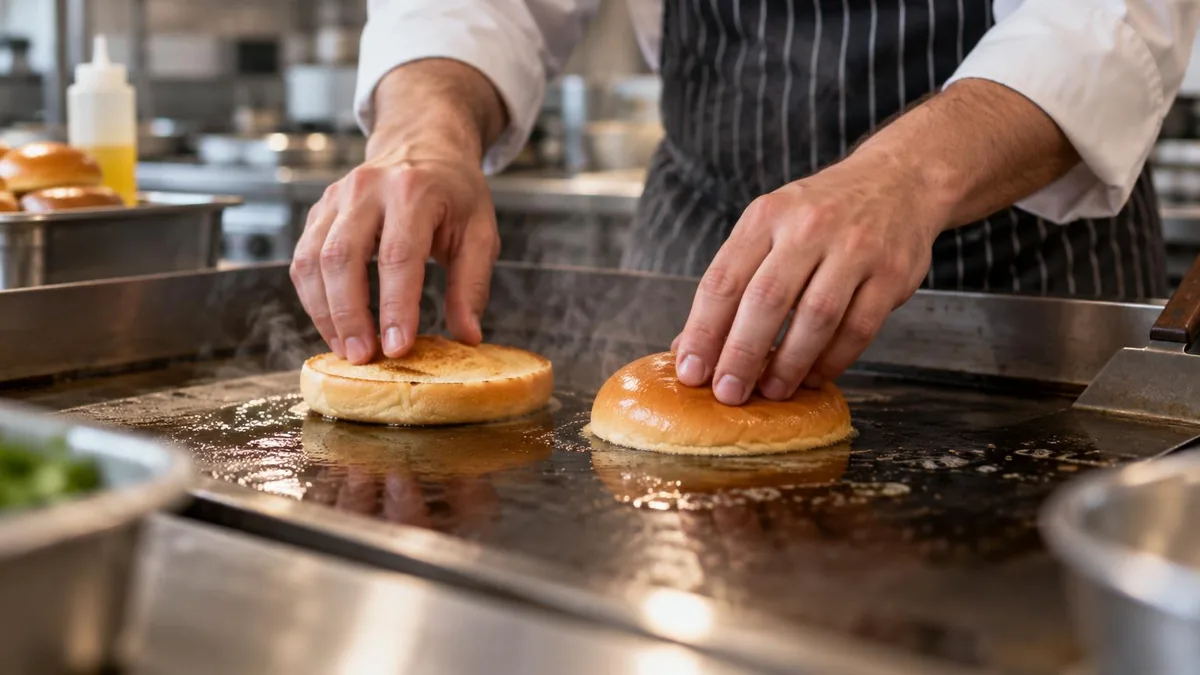
- a separate toaster or griddle for certified gluten-free buns, to avoid contact with crumbs from regular bread;
- packs of certified products stored separately from other bakery ingredients.
This set-up should be planned before the first order arrives, not invented on the spot. A venue that regularly serves sandwich bar items and burgers has every interest in organising this dedicated area in advance, even if it is small.
Staff Training: The Real Safeguard
Written procedures are of little use if staff do not apply them consistently. Training should cover at least three aspects: recognising when to trigger the separate procedure, knowing where the certified products and dedicated utensils are kept, and knowing how to answer customers' questions without making promises the venue cannot keep.
This is where a delicate point comes in: staff must never say that a dish is "100% safe" or "guaranteed risk-free". The correct wording is more honest and more useful: the venue follows a separation procedure and uses certified products, but the final decision on whether to eat the dish rests with the customer, who knows their own tolerance threshold better than anyone.
Certified Products and Traceability
Using certified gluten-free burger buns is the foundation, but it is not enough on its own: you also need to know where they come from, how they are stored and how they are handled in the kitchen. A good supplier provides clear documentation on the product's certification; it is then up to the venue to maintain that assurance throughout its internal chain, from delivery to storage to the moment of service.
Anyone setting up or reviewing relationships with bread suppliers may also find How to choose a bread supplier for your sandwich bar: practical criteria useful, for assessing not only the product but also the reliability of the people who make it.
When Saying No Is the Right Choice
Not every venue has the space or organisation to guarantee adequate separation. In these cases, the right response is not to improvise but to be transparent: explain to the customer that the venue does not have a separate line and leave the decision to them. This approach protects both the customer and the venue, and is far more professional than sloppy handling passed off as safe.
For further reference on coeliac disease and catering, it is worth consulting the guidance of the Italian Coeliac Association (AIC), which offers up-to-date materials on training and managing contamination risk in public venues.
If you also run a hot dog service, you will find specific guidance in Gluten-free hot dog buns: rules, kitchen handling and communication, useful for aligning procedures across the venue's different product lines.
Frequently asked questions
Does front-of-house staff need to know everything about coeliac disease?
No, but they must know when to trigger the internal procedure, who to notify in the kitchen and how to answer without making absolute promises about the final result.
Is using certified gluten-free buns enough on its own?
No. The certified product is the starting point, but kitchen handling — separate utensils, worktops and cooking — is just as decisive in limiting the risk of contamination.
What should we do if the venue has no separate gluten-free line?
It is better to tell the customer clearly than to offer sloppy handling: transparency protects both the customer and the business.