How to choose a burger bun supplier for your sandwich bar: practical criteria
Practical guide for sandwich bars: criteria, formats and logistics for choosing the right burger bun supplier.
Why the choice of supplier makes a difference
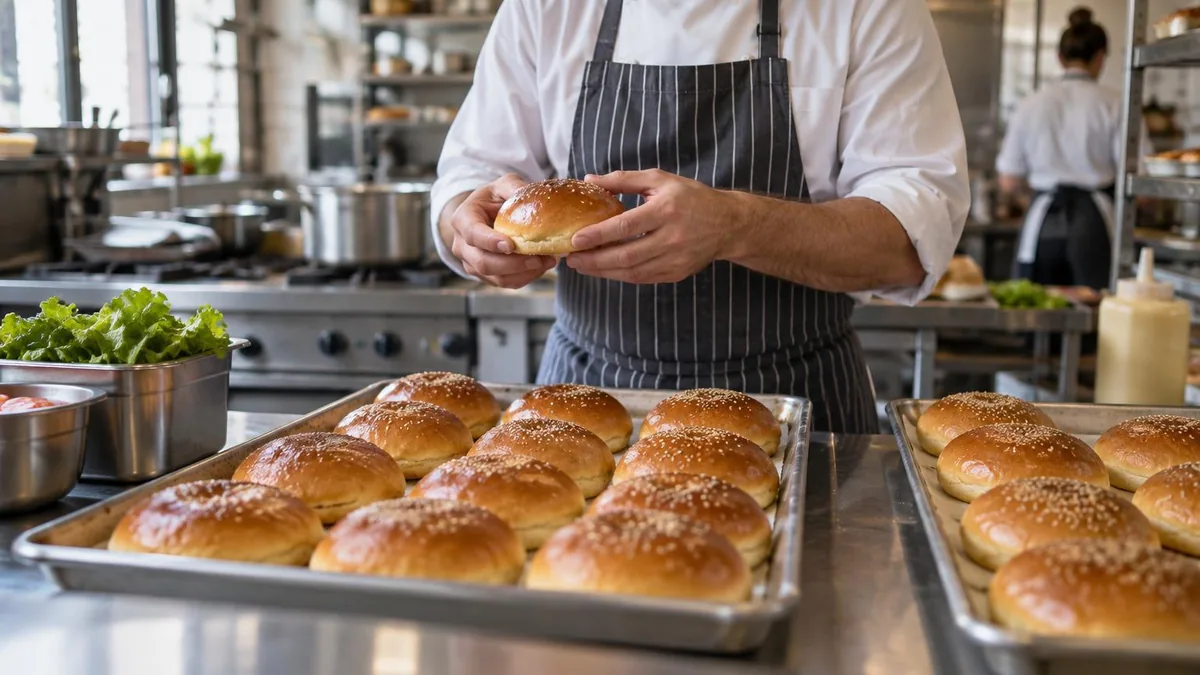
In a sandwich bar, the bun is not just a container: it holds together the filling, sauces and toppings, and it's the element customers notice from the very first bite. This is why choosing the right supplier means guaranteeing consistent quality, straightforward stock management and a product that holds up well under the pace of service, whether at the counter or for delivery.
A venue with a high turnover of sandwiches has different needs from one working mainly on bookings or with a limited menu. This is why supplier selection should take into account the venue's format, actual volumes and the kitchen's capacity to manage stock, thawing or finishing bakes.
Key criteria for evaluating a supplier
A few factors allow for an objective comparison between suppliers' offers:
- Product consistency: the same texture, colour and structure batch after batch.
- Range of formats: availability of different bun weights and diameters to suit burgers, gourmet sandwiches or children's portions.
- Logistics management: delivery frequency, lead times and reliability in fulfilling orders.
- Service and flexibility: the ability to adjust quantities for events or seasonal demand.
- Documentation: technical data sheets, allergen information and storage details that are always available and up to date.
No single criterion is decisive on its own: it is the balance between them that determines whether a supplier is genuinely compatible with how the venue operates.
Artisanal or industrial: understanding what your sandwich bar needs
One of the first decisions concerns which type of production to prioritise. An artisanal bun often offers greater customisation and distinctive organoleptic characteristics, but requires careful order management and production lead times. An industrially produced bun, on the other hand, guarantees standardisation and consistency across large volumes, which is useful for venues working with fixed menus and high turnover.
To explore the advantages and limitations of each option in more depth, it's worth consulting the guide Artisanal or industrial burger buns: how to choose for your restaurant, which analyses selection criteria in detail based on the type of venue.
Formats, bun weight and stock management
A sandwich bar often works across several menu offerings: classic burgers, gourmet sandwiches, smaller portions for children or more generous versions for special occasions. For this reason, it's important that the supplier can guarantee a range of formats consistent with the venue's offer, avoiding waste or unused stock.
Choosing the right bun weight also affects how customers perceive the product and the balance between bun and filling. To get an overview of the different options available on the market, it can be useful to consult the article Burger bun formats and weights for foodservice, which offers practical guidance for calibrating the offer according to the type of venue.
Blast-chilled or frozen: a point to clarify with the supplier
Another decisive factor when choosing a supplier concerns how the buns are preserved: blast-chilled or frozen. Each solution involves different thawing times, cold storage space management and kitchen workflow organisation.
Before signing an agreement, it's advisable to clarify with the supplier which system is used and how it fits with the sandwich bar's space and timings. For a more detailed comparison between the two approaches, the article Blast-chilled or frozen burger buns: differences, shelf life and management provides a useful overview for assessing the operational impact of each choice.
Evaluating the supplier over time
Choosing a supplier doesn't end with the first order. It's good practice to periodically monitor the quality received, check delivery punctuality and keep an open dialogue about any issues. A truly reliable supplier is one that demonstrates the ability to adapt to the venue's needs over time, not just during the initial commercial contact.
For those also managing takeaway or home delivery, it's worth considering from the outset how the chosen bun behaves during transport, as this can affect the final customer's satisfaction.
Frequently asked questions
How can I tell if a supplier is reliable for my sandwich bar?
Check the consistency of the product over time, delivery punctuality and the availability of complete technical data sheets. A reliable supplier responds clearly even to requests for customisation or order changes.
Is it better to rely on a single supplier or diversify?
It depends on volumes and menu complexity. A single supplier simplifies order management, while diversifying can help ensure continuity in the event of logistical problems or demand spikes.
What documents should I request from the supplier before signing a contract?
It's advisable to request product technical data sheets, allergen information, storage conditions and standard delivery times, in order to clearly assess compatibility with the kitchen's organisation.