Restaurant operator FAQs: the most common questions about burger buns
Storage, freezing, toasting, allergens, sizes, delivery and choosing a burger bun supplier for restaurants: practical answers to common questions.
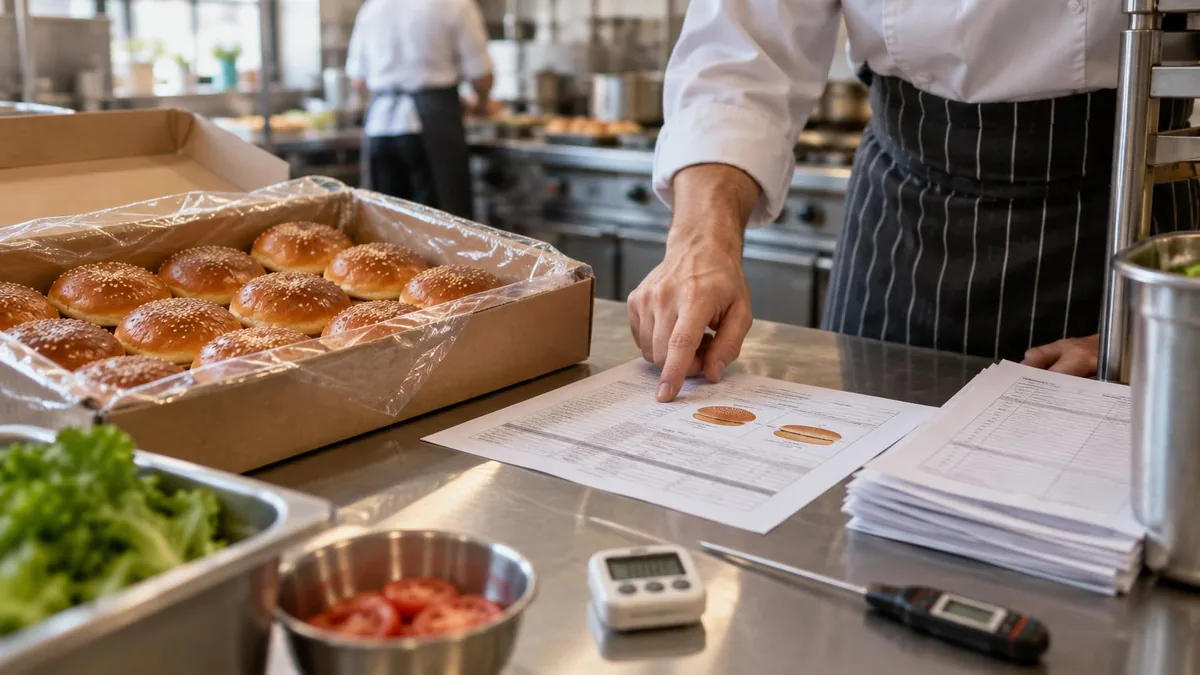
Anyone running a burger restaurant, pub or catering service eventually ends up asking the same questions about buns: how to store them, how to regenerate them, which size to choose, how to manage allergens, how to assess a burger bun supplier for restaurants. We've gathered the most frequent questions here, with practical, straightforward answers. Where values depend on the specific product, we say so clearly: in those cases, the right source is always the technical data sheet for that item.
Frequently asked questions
How should burger buns be stored in a foodservice outlet?
It depends on the supply chain. Fresh buns should be stored as indicated on the label, away from heat and humidity, and used by the date shown. Frozen buns must be kept at −18 °C or below, as required for frozen products under Italian Legislative Decree 110/1992, and thawed following the manufacturer's instructions. In any case, it's best to open only the packs needed for service and to reseal any that have been started properly.
What's the difference between blast-chilled and frozen buns?
"Blast chilling" refers to the process of rapidly lowering temperature, and in commercial language "blast-chilled" is used with meanings that aren't always consistent. "Frozen", on the other hand, is a legally defined term: the product must undergo rapid freezing and be kept at −18 °C or below throughout the whole chain. When an offer refers to blast-chilled buns, it's worth asking the manufacturer how they should be stored, for how long, and with what thawing method.
How do you regenerate a frozen bun?
The most common method is thawing at room temperature, in the closed pack, for the time stated by the manufacturer; some products also call for a short spell in the oven. Times and temperatures vary considerably depending on recipe, size and bun weight, so the technical data sheet instructions should be followed. A useful tip is to plan thawing around the shift's expected demand, so you don't end up with excess thawed buns at the end of service.
Can thawed buns be refrozen?
As a matter of good practice, no: a thawed product should not be refrozen, unless the manufacturer's instructions and your own HACCP plan state otherwise. This is why it helps to choose inner pack sizes that match your service's consumption.
Do you always need to toast the bun?
It's not compulsory, but it's very widespread practice. Toasting the cut side warms the bun, develops flavour and creates a drier surface that slows down the absorption of juices and sauces. It's particularly useful for delivery. Timing and intensity depend on the equipment and the type of dough: brioche buns, for instance, brown faster than other buns.
Brioche or sesame: which should you choose?
These are two very different profiles. The sesame-topped bun has a neutral taste and a classic appearance, and suits almost any savoury filling. The brioche bun, on the other hand, is only suited to sweet preparations (desserts with creams, ice cream): its pronounced sweetness doesn't match the savoury profile of meat and classic sauces. For a savoury burger, the correct choice is the classic bun, milk bun, seeded bun or potato bun.
What sizes do you need for a burger restaurant menu?
In most cases, one or two sizes are enough. As a common rule of thumb, the standard bun measures around 10–12 cm in diameter, while mini buns for catering and aperitivo use are typically between 5 and 7 cm. The decisive factor is the patty: the bun should have a diameter equal to, or slightly larger than, the cooked patty.
Pre-sliced or whole, cut in the kitchen?
Pre-sliced buns speed up service and guarantee an even cut, and are the most common choice in high-volume outlets. Whole buns allow more flexibility over the height of the cut and protect the crumb until use, but require time and manual skill on the line.
How should bun allergens be managed?
Regulation (EU) No 1169/2011 lists the substances that cause allergies or intolerances, and outlets must be able to inform customers even about non-prepacked food. Buns often contain cereals with gluten, milk, eggs and sesame, but the composition varies from product to product: the ingredients list and any "may contain traces of" statements should be read carefully, and the information updated every time a product is changed.
Can I offer a gluten-free burger?
Yes, but with care. Under Regulation (EU) No 828/2014, the term "gluten-free" is only permitted if the food served contains no more than 20 mg/kg of gluten. Buying a bun labelled as such isn't enough: you need separate storage, a dedicated toaster or surface, reserved utensils and trained staff, to avoid contamination with gluten-containing products. On the menu, the wording must be precise and free of any medical claims.
How do you stop the bun going soggy in delivery?
The main levers are: toasting the inside of the bun, using packaging with vents or greaseproof paper that limits condensation, building the burger with "barrier" ingredients (cheese, dry lettuce) in contact with the bun, serving the runnier sauces on the side, and choosing a bun with a denser crumb. Organisation matters too: assembling the burger just as the rider is arriving.
Are there minimum order quantities for burger buns?
Generally, yes: many manufacturers for the foodservice trade work with a minimum order, expressed in cartons, units or value, and with set delivery days and areas. Terms vary from supplier to supplier and can also depend on the channel (direct delivery or via a distributor). It's worth asking about these upfront, along with lead times and whether different products can be combined in the same order.
How do I work out how many buns to order?
Start from the number of burgers sold per opening day, add these up over the week, include a safety stock for unexpected demand and waste, and round up to the nearest available pack multiple. The margin can be wider with frozen buns, which have a long shelf life, and tighter with fresh ones. The calculation should be checked periodically against actual consumption.
Is it worth asking for free samples before choosing?
Yes, and it's the single most useful step. Samples should be tested under your outlet's real conditions: with the same patty, the same sauces, the same toasting equipment and, for delivery, the same packaging and a wait time equal to your average delivery time. Comparing several buns at the same time makes the differences much clearer.
How do you choose a burger bun supplier?
Besides taste, assess the consistency of the product over time, how complete the technical data sheets are (ingredients, allergens, storage, regeneration), the range of sizes available, the availability of specific items such as individually wrapped gluten-free buns, order terms and delivery reliability. The ability to answer a technical question quickly is also a good indicator: the bun is a central ingredient on the menu, and the relationship with the people who make it lasts over time.