Burger buns for delivery: how to keep the burger intact
Condensation, sauces, packaging and delivery times: how to choose and prep the bun so the burger arrives without going soggy.
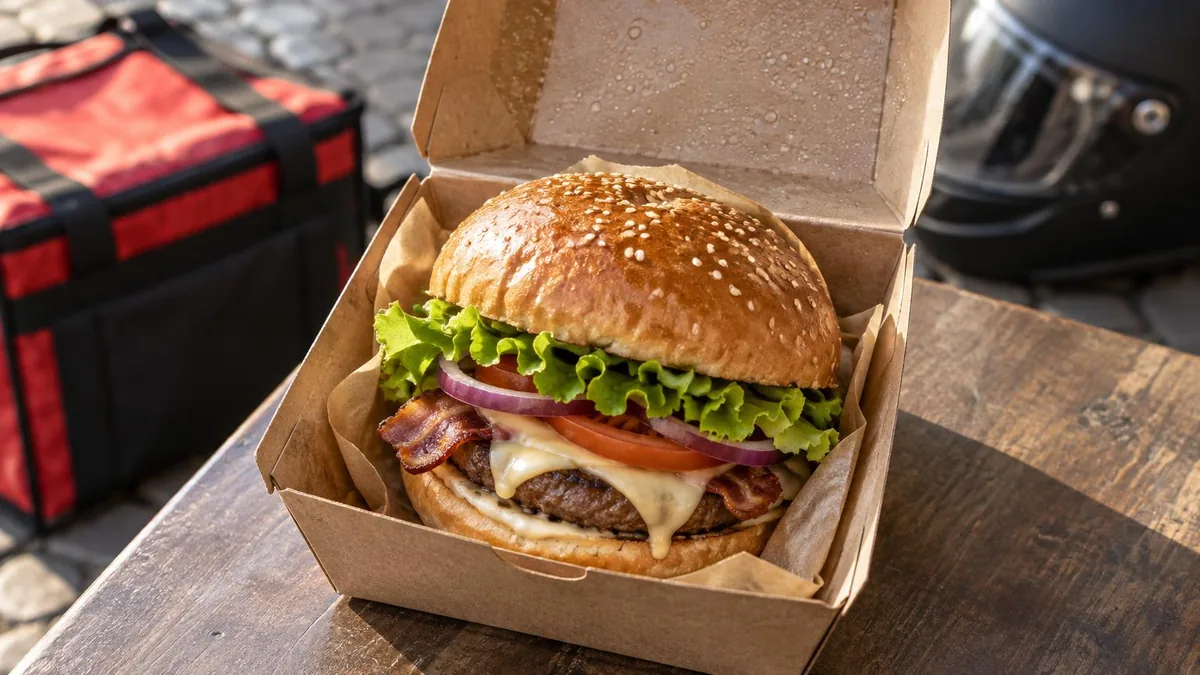
A burger that looks perfect straight off the grill can arrive at the customer's door unrecognisable: a collapsed bun, a soggy base, sauce running everywhere. In delivery, the burger goes through a journey that doesn't exist in the dining room, made up of waiting time, sealed containers, temperature swings and bumps in transit. The bun is the component that suffers most, and it's also the one you can improve most effectively.
This guide brings together the practical measures burger restaurants, pubs and dark kitchens use to improve product integrity during delivery. There's no single fix: it's worth testing combinations against your own menu and delivery times, perhaps ordering a couple of burgers from your own restaurant the way a customer would.
The main enemy: condensation
When a hot burger is sealed inside a container, the steam rising from the patty and bun has nowhere to go. It condenses on the walls and lid and drips back down onto the burger, softening the bun's crust and leaving the surface damp and rubbery.
The problem gets worse with:
- airtight containers, which trap all the steam;
- very juicy patties or ones taken straight off the heat, which release more moisture;
- long delivery times, which give condensation time to do its damage;
- wrapping in close contact with the bun, such as cling film or tightly wrapped foil.
Hence the first rule: the bun needs to "breathe" just enough, without cooling down too fast.
Breathable, correctly sized packaging
The choice of container matters as much as the recipe. The most commonly used options in burger delivery are:
- cardboard boxes with vents or perforations, which let some of the steam escape;
- greaseproof or waxed paper wrapped loosely, which protects the bun from direct contact with the container walls;
- correctly sized containers, neither too tight (which crush the bun) nor too large (which let the burger slide around and fall apart).
It's best to avoid sealing the burger inside plastic bags and stacking multiple hot boxes with no space between them. The rider's insulated bag also matters: if it traps a lot of heat and moisture, the container's vents become even more important.
Toasting as a barrier
Toasting the inner surfaces of the bun is one of the most effective measures. The toasted layer forms a drier, more compact surface that slows down the absorption of juices and sauces into the crumb.
Some good-practice pointers:
- toast both halves evenly on the cut side;
- aim for even browning without burning: a charred surface crumbles and affects flavour;
- let the toasted bun rest for just a few moments before assembly, so you don't seal the steam from toasting inside the container as well;
- some recipes use a thin layer of fat (butter or similar) on the surface before toasting, which helps create a barrier; this should be assessed based on flavour and menu.
Toasting times and temperatures depend on the equipment and type of bun: a bun rich in sugars, such as a brioche bun, browns much faster than a milk bread or sesame-topped bun. These need to be calibrated in the kitchen.
Assembly order
The sequence of ingredients determines where the liquids end up. Some useful principles for delivery:
- place "barrier" ingredients in contact with the bun, such as a well-dried lettuce leaf or a slice of cheese, before the moist elements;
- position the patty away from the base when possible, or separate it with melted cheese, which creates a protective layer;
- keep tomato, cucumber and other watery vegetables in the centre, not in direct contact with the crumb;
- pat dry washed vegetables and pickles thoroughly before assembly.
The amount of sauce also needs rethinking for takeaway: the quantity designed for a burger eaten immediately at the table can be excessive after a journey.
Sauces on the side
The safest solution, especially for liquid or generous amounts of sauce, is to serve them in separate pots or single-serve portions. The customer adds them at the moment of eating, and the bun arrives intact. Many restaurants use a mixed approach: a small amount of base sauce inside the burger, to guarantee flavour even for customers who don't add anything, with the rest on the side.
If sauces travel separately, it's worth stating this clearly in the product description on the platform, so the customer doesn't think something was forgotten.
Choosing a more structured bun
Not all buns behave the same way in delivery. A very soft, airy bun that's perfect in the dining room can give way after a few minutes of waiting. For delivery, operators tend to prefer:
- a denser, more even crumb, which absorbs liquid more slowly;
- a slightly firmer crust, which holds its shape;
- a suitable height for the filling, so the bun isn't crushed under the weight of the ingredients.
Some restaurants use the same bun for dine-in and delivery; others choose a different reference for takeaway. When assessing samples, it's worth running a real test: assemble the burger, seal it in the packaging actually used, and open it after a time equal to the average delivery time, comparing several types of bun under the same conditions.
Delivery times and organisation
No amount of tweaking compensates for too long a wait. Some organisational levers:
- assemble the burger at the last moment, when the rider is arriving, not when the order comes in;
- set a delivery radius consistent with the product's holding capacity;
- pack hot sides and fried items in a separate container, as they produce steam and moisture;
- gather customer feedback from reviews, looking for recurring comments such as "soggy bun" or "burger arrived falling apart".
A good approach is to set an internal maximum time beyond which the product no longer performs as it should, and organise prep zones and timing accordingly.
Frequently asked questions
What's the best bun for delivery?
Generally a bun with a dense crumb and a slightly firm crust, which absorbs liquids more slowly. More than the type of dough, what matters is how the bun performs in a real test: assembly, packaging and a waiting time equal to the average delivery time.
Does toasting the bun really help for takeaway?
Yes, it's one of the most effective measures: the toasted surface forms a drier layer that slows down the absorption of juices and sauces. Timing and intensity should be calibrated to the equipment and type of bun.
Is it better to put sauces inside the burger or on the side?
For liquid or generous amounts of sauce, on the side is the safer choice. Many restaurants use a compromise: a small amount of sauce inside the burger to guarantee flavour, with the rest in a single-serve portion.