Heard opens flagship burger restaurant with speakeasy floor for cocktails and desserts
In London, a Michelin-trained chef's burger brand opens a two-storey site with a cocktail and dessert speakeasy: what it can teach the trade.
What's happening
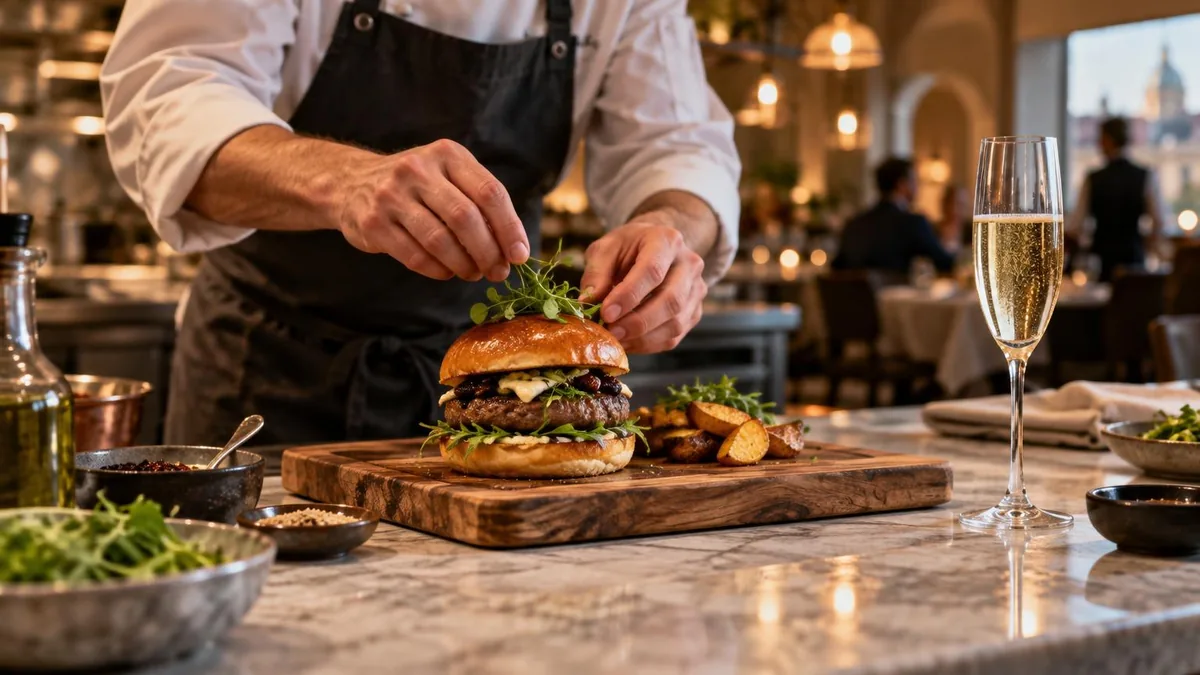
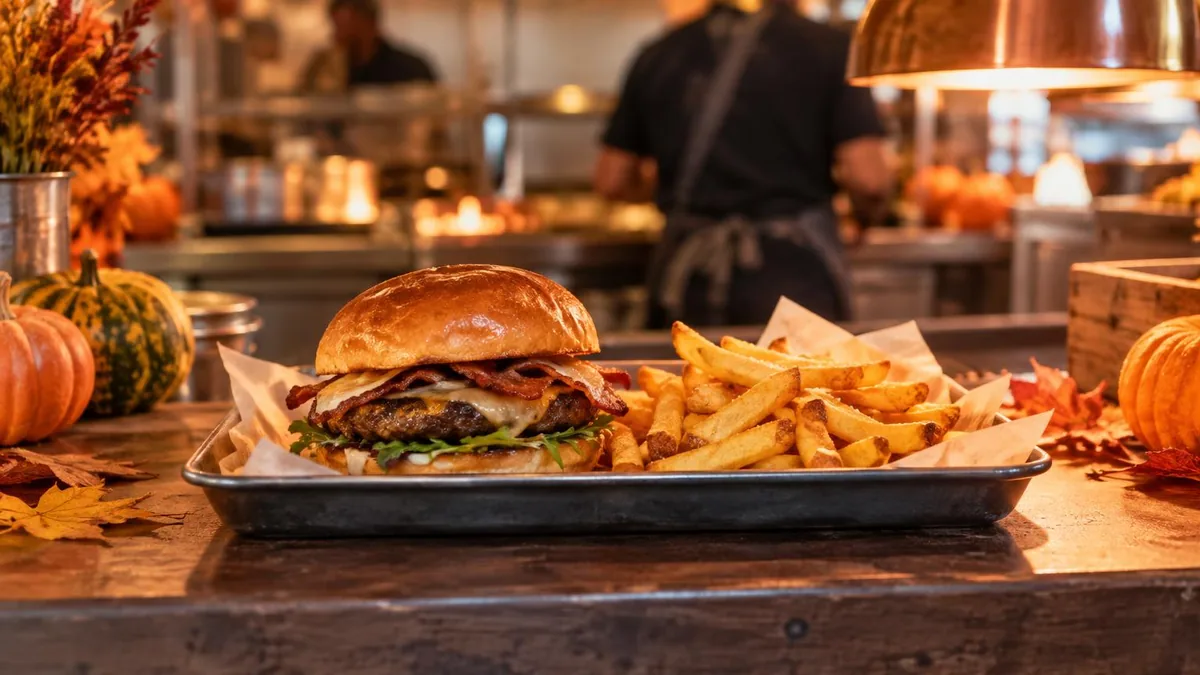
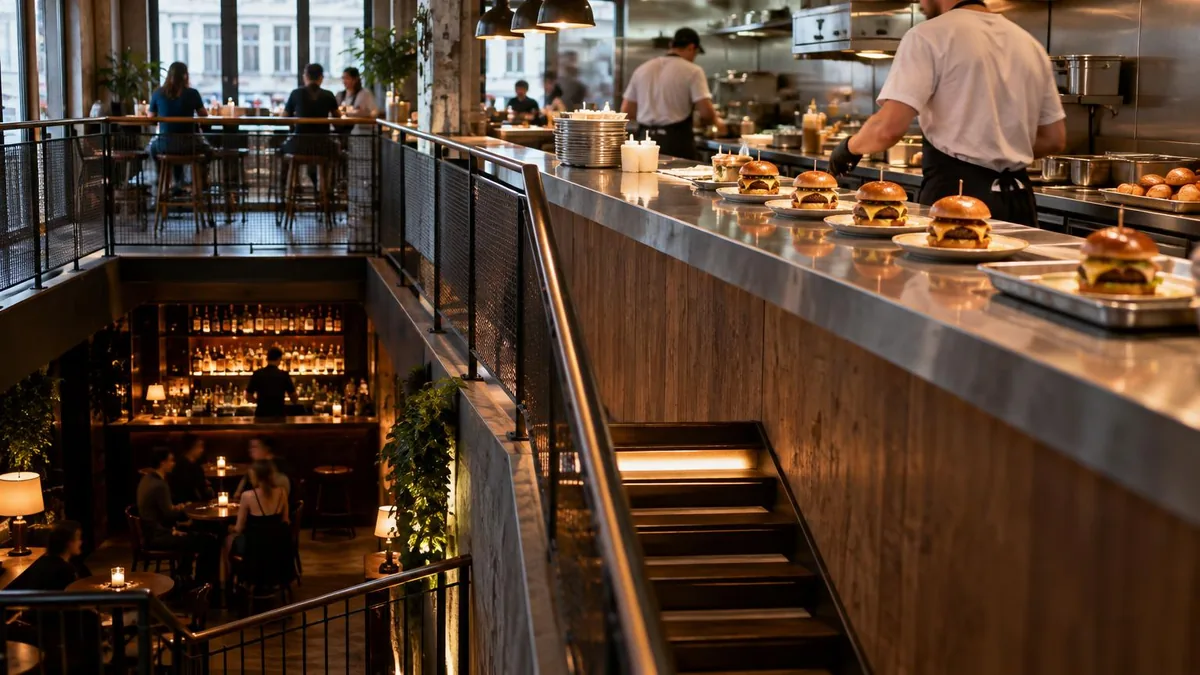
In London's Covent Garden, the burger chain founded by chef Jordan Bailey (who holds Michelin stars through other projects) is opening its largest site to date in November, as reported by Big Hospitality. It's a two-storey flagship: the main floor carries the brand's established menu, built around British beef double smash patties, an option billed as "The Boring Burger" and a vegetarian offer with a house-made black bean and wild mushroom patty. Downstairs, a speakeasy is dedicated to cocktails and desserts, designed as a separate but complementary experience to the restaurant above.
This is more than just another opening: it's a hybrid format put into practice, where a single address hosts two distinct occasions — the quick burger meal and the more relaxed evening built around drinks and dessert.
Why it works there
In the UK market, and in London especially, the chef-led gourmet burger has been an established category for years, with customers used to paying a premium for traceable ingredients and careful preparation. At the same time, the evening drinks and cocktail culture is strong in central areas of the city, where venues compete to capture both the lunch/dinner crowd and the after-dinner crowd.
Bringing the two formats under one roof follows a clear logic: it optimises the use of space and staff across different time slots, increases average spend per square metre, and gives customers a reason to stay longer, moving from the "burger" floor to the "drinks" floor without leaving the building. In a market where rents in central locations are very high, the dual function of a single space becomes an economic advantage as well as a positioning one.
Where this trend stands in Europe
There is no structured data available on how many venues across Europe have already adopted a similar two-storey model combining a burger restaurant with an integrated speakeasy. Hybrid formats — kitchen plus cocktail bar under the same roof — do exist, particularly in larger cities, but rarely with the same split across two distinct floors and with such a strong brand identity on both sides.
It would therefore be premature to call this a widespread trend: for now, it appears to be a model seen abroad rather than an established practice across the European burger restaurant scene. It is worth watching as a possible future development, particularly in cities with a high density of evening venues and customers willing to pay for a more elaborate experience.
How to adapt it for a restaurant
For an operator looking to experiment with something similar without necessarily committing to a major property investment, the starting point can be more modest: differentiating the offer by time of day within the same venue, perhaps setting aside an area after a certain hour for drinks and desserts, while keeping the core burger service central at lunch and dinner.
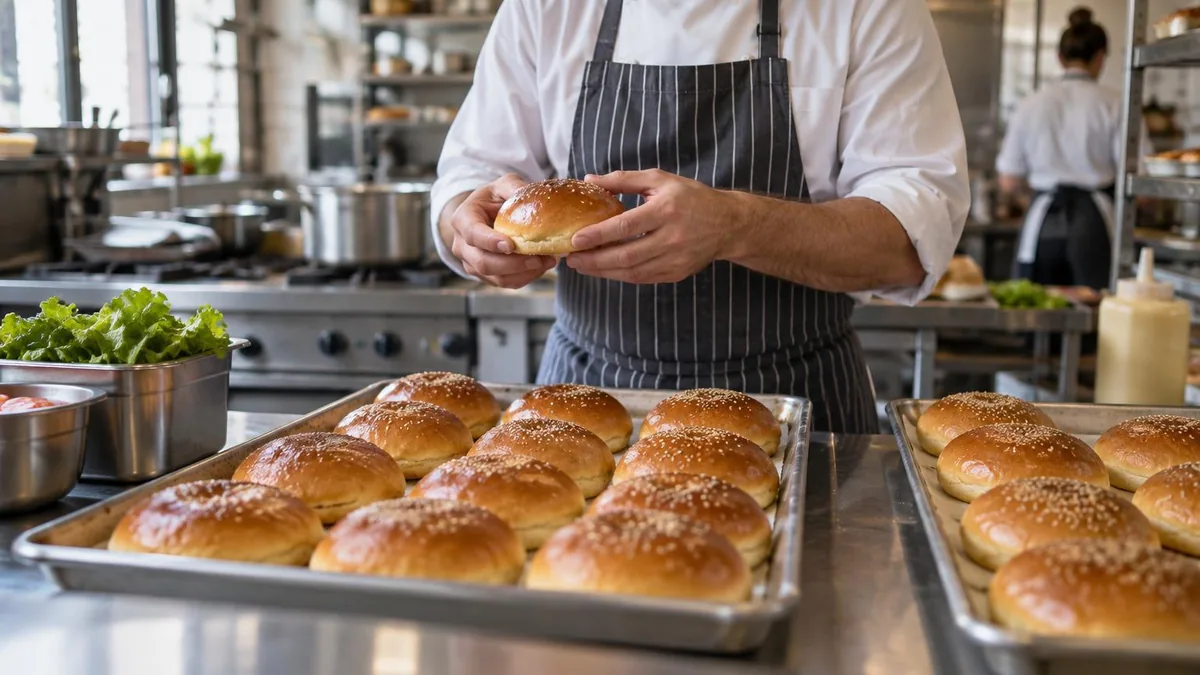
On the bread side, bun choice can help mark this distinction between occasions: for the main service, a plain classic bun, seedless, is a versatile option for both beef and vegetarian burgers, while a sesame-topped bun can suit a more gourmet offer in line with a premium positioning. For smash preparations, which need a thin bun able to withstand the moisture from toppings, a potato bun with a smooth finish can be a good fit, holding up to sauces and condiments without falling apart — a subject also covered in our article on buns for smash burgers.
The risks of a hybrid format are not negligible: it calls for significant investment in space, dual staff training (kitchen and mixology), and the risk of diluting brand identity if the two offers aren't coherent with each other. For anyone considering opening or refurbishing a venue, it can be useful to compare artisan and industrial bread depending on expected volumes, as explained in Artisan or industrial burger buns: how to choose for your restaurant, as well as to assess bun formats and weights according to the type of burger on offer, a topic covered in Burger bun formats and weights for foodservice.
Frequently asked questions
Does a format like this need two separate floors?
No. The underlying idea — separating the burger service from the cocktail/dessert service, either in time or in space — can also be adapted to a single room, with different layouts and hours throughout the day.
Does a menu geared more towards cocktails and desserts need a different bun?
For plated desserts, we're no longer talking about burger buns at all; for any burger served in a more casual or late-night setting, the choice still comes down to a classic bun, a seed-topped bun or a potato bun — never a brioche bun, which on this portal is reserved exclusively for sweet preparations.
Is it worth copying this model straight away?
It's wise to start small: test a different evening offer within the same venue before committing to a major refurbishment, and gauge how the local customer base responds.
Sources
Source: Heard reveals plans for two-storey flagship restaurant with dessert and cocktail speakeasy